

New Book Releases
New Publications as Part of the “Indigeneities in the 21st Century” Project by Philipp Schorch
07.10.2026
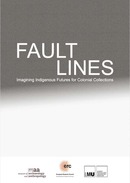
Schorch, Philipp et al. 2026. Fault Lines: Imagining Indigenous futures for colonial collections exhibition catalogue.
Fault Lines: Imagining Indigenous futures for colonial collections (2025-26) was a exhibition hosted by the Museum of Archaeology and Anthropology which brought together Indigenous curators and contemporary artists.
With seismic shifts, ruptures, and renewals as the starting point, ‘Fault Lines’ activated historic and continuing links between the United Kingdom, Bougainville, Hawaiʻi, the Torres Strait, and the Salish Sea. Through deep engagements with ancestral objects, artistic interventions, and new research, the exhibition presented a series of Indigenous curatorial responses to current debates regarding collections, custodianship, and decolonisation.
The exhibition formed part of the ERC Group ‘Indigeneities in the 21st Century’: www.indigen.eu
The 'Fault Lines' exhibition catalogue is available to download for free: https://maa.cam.ac.uk/
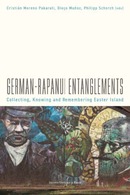
Schorch, Philipp, Cristián Moreno Pakarati, Diego Muñoz (eds.). 2026. German–Rapanui Entanglements: Collecting, Knowing and Remembering Easter Island. Leuven: Leuven University Press. DOI: 10.11116/9789461667717
Open Access Download
This book traces German-Rapanui entanglements from past to present through encounters between scholars, missionaries, institutions and Indigenous actors, and through the material and visual traces—objects, photographs, and texts— that continue to shape knowledge and memory of Rapa Nui (Easter Island). Moving beyond limiting Eurocentric frames, it highlights how Rapanui people have actively engaged with German and German-speaking individuals and institutions to (re)shape different practices and discourses of ‘Rapanuiness’. The chapters bring these dynamics to life: from Bavarian Capuchin activities that reached far beyond conversion, to collecting and exhibiting networks linking Altötting in Bavaria to Rapa Nui; from German efforts to record oral traditions and the 1957 German–Chilean expedition, to long-term archaeological collaborations at Ava Ranga Uka A Toroke Hau.
Written by scholars based in Rapa Nui, Germany, Chile, France, and the United States, the volume shows how Rapanui communities have shifted from being marginalised in the management of their heritage to becoming key agents in its interpretation and future. Together, these studies illuminate three centuries of entanglement—and their powerful resonance today.